
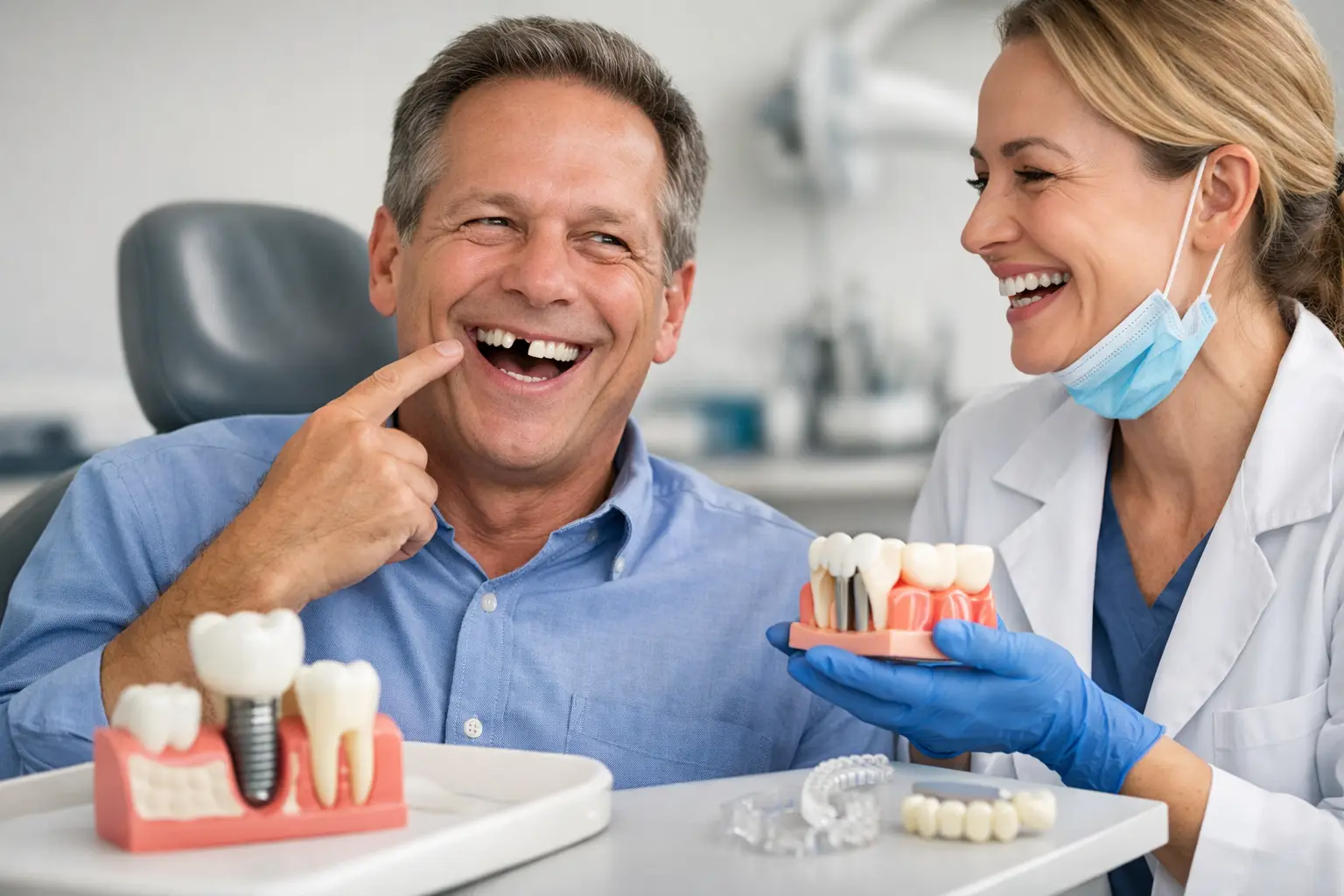
A missing tooth changes more than your smile. It can affect how you chew, how you speak, and even how confident you feel in everyday moments like laughing, eating out, or being in photos. If you are weighing the best treatments for missing teeth, the right answer depends on where the tooth is missing, how many teeth are involved, your jawbone health, and what feels realistic for your budget and lifestyle.
The good news is that modern dentistry offers several reliable ways to replace missing teeth. The better news is that you do not have to figure it out alone. A good treatment plan should restore function, protect your long-term oral health, and feel comfortable enough to fit into daily life.
What happens when a tooth is missing
Even one missing tooth can create a ripple effect. Nearby teeth may begin to shift into the open space over time, which can change your bite and make cleaning more difficult. If the missing tooth is not replaced for a while, the jawbone in that area can begin to shrink because it is no longer being stimulated by the tooth root.
That bone loss matters. It can affect facial support, complicate future treatment, and sometimes make a simple replacement more involved later on. Missing teeth can also place extra pressure on the remaining teeth, especially if you start chewing more on one side.
This is why replacing a missing tooth is not only about appearance. It is also about keeping the rest of your mouth stable and healthy.
Best treatments for missing teeth: the main options
There is no one-size-fits-all replacement. The best treatments for missing teeth usually fall into three categories: dental implants, dental bridges, and dentures. Each has strengths, limitations, and ideal use cases.
Dental implants
For many adults, dental implants are the closest thing to replacing a natural tooth. An implant uses a small titanium post placed in the jawbone to act like an artificial root. Once it heals, a custom crown is attached on top.
The biggest advantage is stability. Implants do not rely on neighboring teeth for support, and they help stimulate the jawbone in a way other options cannot. That makes them especially valuable for long-term oral health. They also tend to feel very natural when chewing and speaking.
Implants are often an excellent choice for a single missing tooth, multiple missing teeth, or even full-arch restoration in some cases. They can last many years with good care.
That said, they are not always the fastest option. Treatment can take several months depending on healing time, and some patients need bone grafting before placement if bone volume is limited. Cost is another factor. Implants usually involve a higher upfront investment than bridges or dentures.
Dental bridges
A dental bridge replaces one or more missing teeth by anchoring an artificial tooth to the natural teeth on either side of the gap. In many situations, a bridge offers a practical and effective solution without surgery.
One advantage is timing. Bridges can often be completed more quickly than implants, and they are fixed in place, which many patients prefer over a removable appliance. They can restore appearance and chewing function very well, especially when the teeth next to the gap already need crowns or additional support.
The trade-off is that a traditional bridge typically requires shaping the adjacent teeth. If those teeth are healthy and untouched, some patients prefer a treatment that leaves them intact. A bridge also does not replace the root, so it will not prevent bone loss in the same way an implant can.
Still, bridges remain one of the best treatments for missing teeth when the clinical situation supports it and the goal is a strong, efficient, non-removable option.
Dentures
Dentures are removable appliances used to replace several missing teeth or a full arch. They have been used successfully for many years, and today’s dentures can be more comfortable and natural-looking than many people expect.
Partial dentures are designed when some natural teeth remain. Full dentures replace all teeth in the upper or lower arch. For patients missing many teeth, dentures can restore daily function and appearance in a relatively cost-conscious way.
Dentures do come with adjustments. They may take time to get used to, and lower dentures in particular can sometimes feel less stable than patients would like. Over time, as the jawbone changes, dentures may also need relining or replacement.
For some patients, implant-supported dentures offer a middle ground. They combine the broader tooth replacement of a denture with the added stability of dental implants. This can improve comfort, chewing ability, and confidence significantly.
How to choose the right treatment
The best option is not always the most advanced one on paper. It is the one that fits your mouth, your health, and your priorities.
If you are missing one tooth and want the most natural function with long-term bone support, an implant is often the leading choice. If you want a fixed option but prefer to avoid surgery, a bridge may make more sense. If you are missing many teeth and want an efficient way to restore your smile, dentures or implant-supported dentures may be the better path.
Age alone is not the deciding factor. Overall oral health, gum condition, medical history, and bone density matter more. So does your timeline. Some patients want the most durable long-term solution. Others need a treatment that solves an immediate problem and works within a clearer budget.
A thoughtful exam helps sort through those factors. X-rays, a bite evaluation, and a conversation about your goals can reveal which options are realistic and which ones may lead to compromise.
When timing matters
Many people wait to replace a missing tooth because the space is not very visible or it does not seem urgent. That is understandable, but waiting can narrow your options.
As teeth shift and bone changes, treatment may become more complex. A gap that could once have been addressed simply may later require orthodontic movement, grafting, or a broader restoration plan. If the missing tooth affects how you chew, the surrounding teeth may also start showing wear.
You do not always need to rush into treatment, but it helps to get evaluated early. Even if you decide not to move forward right away, you will have a clearer picture of what to expect.
What a good treatment plan should include
Replacing a missing tooth should never feel rushed or one-dimensional. A good plan looks at the whole mouth, not just the empty space. That includes gum health, bite balance, the condition of neighboring teeth, and whether there are signs of grinding or clenching that could affect the result.
Comfort matters too. Patients often focus on the final restoration, but the experience of getting there is just as important. Clear communication, coordinated care, and a team that explains the pros and cons in plain language can make the process much easier.
At a full-service practice like Oakville Dental House, that kind of planning can happen under one roof, which helps simplify care when restorative treatment involves more than one step.
Questions worth asking before you decide
Before choosing between the best treatments for missing teeth, ask a few practical questions. How long is this option expected to last? Will it affect neighboring teeth? How will it feel when chewing? What kind of maintenance will it need? And if costs are a concern, what is the long-term value rather than only the upfront price?
Those questions often lead to better decisions than asking only which treatment is cheapest or fastest. Dentistry works best when it matches both your clinical needs and your real life.
Losing a tooth can feel like something you should just live with, especially if it happened gradually or has been there for a while. But there are good solutions, and the right one can make eating easier, protect your oral health, and help you feel like yourself again. If you are unsure where to start, start with a conversation – the best next step is the one that gives you clarity.
No responses yet