
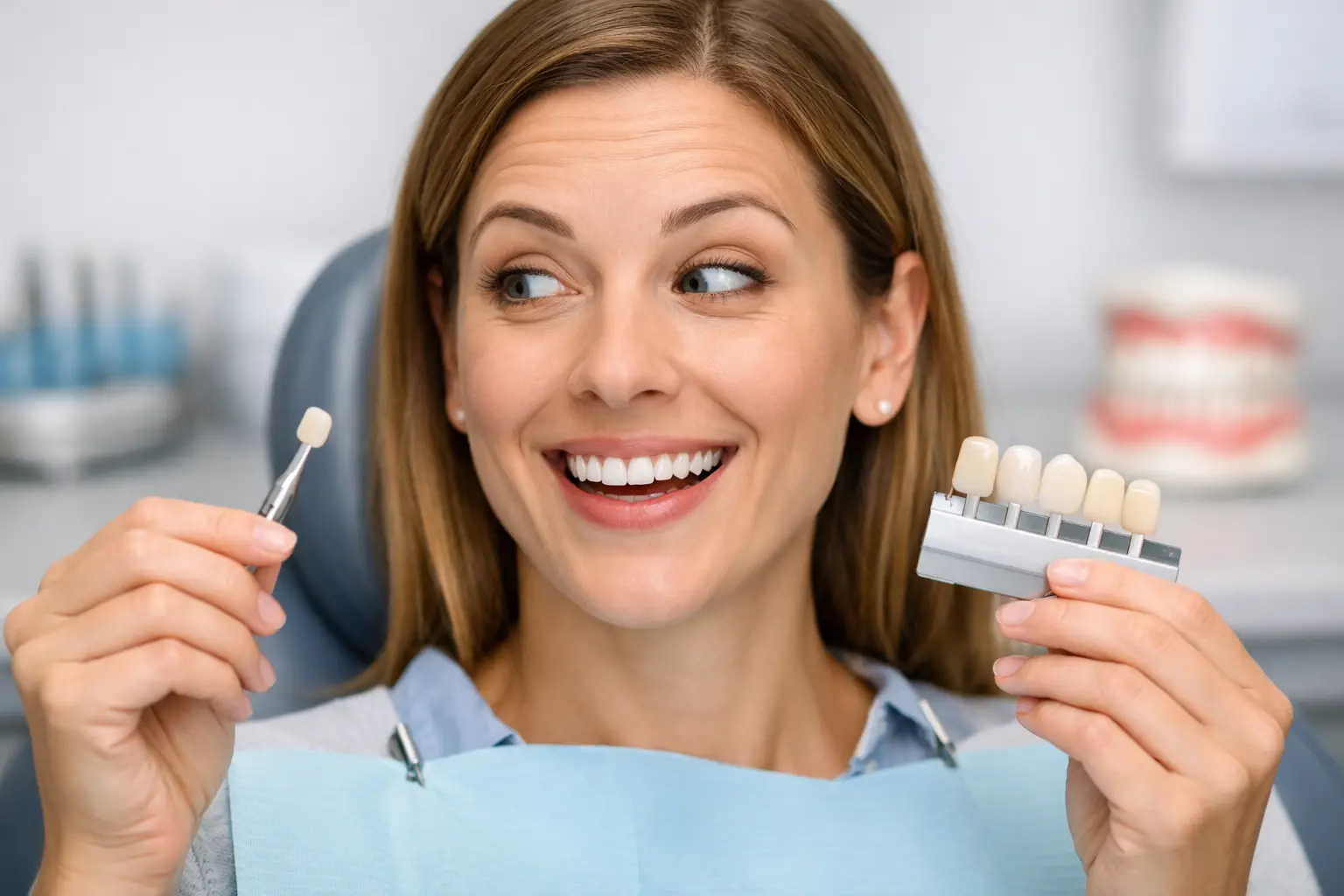
A small chip on a front tooth can make a big difference in how you feel when you smile. When patients ask about dental bonding vs veneers, they are usually trying to solve a very specific problem – a crack, a gap, uneven edges, stains that do not lift, or teeth that look worn before their time. Both treatments can improve a smile beautifully, but they are not interchangeable.
The right choice depends on what you want to change, how long you want results to last, how much natural tooth structure is involved, and how you feel about maintenance over time. If you are deciding between the two, it helps to think beyond the before-and-after photo and look at how each option actually performs in real life.
Dental bonding vs veneers: the main difference
Dental bonding uses a tooth-colored composite resin that is shaped directly onto the tooth. Your dentist applies the material, sculpts it to improve the tooth’s form, then hardens and polishes it. It is a conservative treatment and often requires little to no enamel removal.
Veneers are thin shells, usually made from porcelain, that are custom crafted to cover the front surface of a tooth. They are designed to change color, shape, size, and overall symmetry in a more dramatic and longer-lasting way. Veneers typically require some enamel removal so they fit naturally and do not look bulky.
That difference matters. Bonding is usually quicker, less invasive, and more affordable upfront. Veneers are typically stronger, more stain-resistant, and better suited for bigger cosmetic changes.
When dental bonding makes sense
Bonding is often a very good option when the changes are modest. If you have a minor chip, a small gap, slightly uneven edges, or one tooth that needs a shape adjustment, bonding can be an excellent fit. It can also be useful when a patient wants to improve a smile without committing to a more extensive cosmetic treatment.
One reason people like bonding is that it is efficient. In many cases, it can be completed in a single visit. There is no waiting for a lab to fabricate the final restoration, and the treatment is often straightforward from start to finish.
Bonding also appeals to patients who want to preserve as much of their natural tooth as possible. Since the resin is applied directly and the prep is usually minimal, it is considered one of the more conservative cosmetic options.
That said, bonding has limits. Composite resin is durable, but it is not as strong as porcelain. It can chip, wear down, or pick up stains over time, especially if you drink a lot of coffee, tea, or red wine, or if you clench and grind your teeth.
When veneers are the better choice
Veneers tend to be the stronger option when you want a more significant cosmetic change. They are often recommended for teeth with deeper discoloration, more noticeable wear, irregular shapes, or multiple front teeth that need to look more balanced together.
Porcelain reflects light in a way that closely resembles natural enamel, which is one reason veneers can look so natural when they are well designed. They also resist staining better than bonding, which matters if long-term brightness is important to you.
Veneers can be especially helpful when a smile makeover involves consistency across several teeth. If one tooth is chipped, another is undersized, and a few have stubborn discoloration, veneers can create a more unified result than patching each issue separately with bonding.
The trade-off is that veneers usually require more planning, more investment, and at least two visits. Because some enamel is often removed, the decision is less easily reversed than bonding.
Appearance: subtle fix or bigger transformation?
If your goal is a small correction that blends into the rest of your smile, bonding can work very well. Skilled bonding can look smooth and natural, especially when it is used on a limited area and matched carefully to the surrounding tooth.
If your goal is a broader transformation, veneers often have the edge. They offer more control over shape, translucency, brightness, and symmetry. That does not mean they should look overly white or artificial. Done well, veneers should still suit your face, bite, and natural features.
This is where treatment planning matters. The best cosmetic result is not the one that looks the most dramatic in a photo. It is the one that feels like you, only more polished and balanced.
Durability and daily wear
In a dental bonding vs veneers comparison, durability is often where veneers pull ahead. Porcelain veneers can last many years with good care, and they generally hold their polish and shape better than bonding. Composite bonding can also last well, but it is more likely to need touch-ups, repairs, or replacement sooner.
That does not automatically make veneers the better value for everyone. If you only need a small repair on one tooth, bonding may be the most practical and sensible choice. If you are investing in multiple front teeth and want a longer-lasting cosmetic solution, veneers may make more sense.
Your habits matter here. If you bite your nails, chew ice, open packages with your teeth, or grind at night, both bonding and veneers are at greater risk. In those cases, your dentist may recommend a night guard or a different treatment plan to protect your results.
Cost: upfront versus long-term
Bonding is usually less expensive at the start. For many patients, that makes it an appealing first step, especially when the correction is minor and the budget is a factor.
Veneers typically cost more because they involve more design, more preparation, custom lab fabrication, and materials that are highly durable and esthetic. But cost should be viewed in context. A lower upfront price does not always mean lower cost over time if a restoration needs more frequent maintenance or replacement.
The better question is not just, “Which one costs less?” It is, “Which one fits my goals, timeline, and expectations?” A conservative, affordable treatment can be the right choice. So can a larger investment, if it solves the problem more completely.
Maintenance and repairs
Bonding can usually be repaired more easily if it chips. That is one of its practical advantages. Small defects can often be reshaped or added to without replacing the whole restoration.
Veneers are more stain-resistant and tend to keep their appearance better over time, but if a veneer is damaged, repair may be less simple. In some cases, replacement is the better route.
Both options still require the basics: daily brushing and flossing, regular dental visits, and reasonable care with hard foods and damaging habits. Cosmetic dentistry does not replace healthy routines. It works best when it is built on them.
Who is a good candidate for each?
A healthy foundation comes first. If you have active decay, gum disease, untreated clenching, or bite issues, those concerns should be addressed before cosmetic treatment moves forward. A beautiful result will not stay beautiful for long if the supporting oral health is unstable.
Bonding may be ideal if your teeth are generally healthy and you want a modest change with minimal prep. Veneers may be a better fit if you want a more comprehensive improvement in color and shape, or if you have several front teeth that need to be redesigned together.
There is also an in-between answer that people do not always expect. Some smiles do best with a combination approach. One patient may benefit from veneers on a few visible teeth and bonding on another. Cosmetic dentistry is not always all-or-nothing.
How to decide with confidence
Photos online can help you spot what you like, but they cannot tell you what your teeth, bite, enamel, and habits need. A proper exam matters. So does a conversation about what you want your smile to look like six months from now and five years from now.
At a full-service practice like Oakville Dental House, cosmetic treatment planning can be approached with your whole oral health in mind, not just the appearance of one tooth. That can make a real difference when comfort, function, and long-term maintenance are part of the goal.
If you are choosing between bonding and veneers, try to think less about which treatment sounds more impressive and more about which one fits your smile honestly. The best cosmetic dentistry feels natural, functions well, and still makes sense years after the appointment. A good place to start is simply asking what your teeth need, not just what they could look like.
No responses yet