
Some parents are surprised to learn the answer to when should kids see dentist is not “when all the baby teeth are in” or “when there is a problem.” In most cases, a child should have a first dental visit by age 1 or within 6 months of the first tooth coming in. That can feel early, especially if everything looks fine, but early visits are less about treatment and more about prevention, guidance, and helping children feel comfortable from the start.
For many families, the first visit is also a relief. Instead of waiting for pain, a chipped tooth, or a cavity to force the issue, you get a chance to ask questions early and build healthy habits before problems begin.
When should kids see dentist for the first time?
The general guideline is simple: by the first birthday, or within 6 months after the first tooth appears. Some babies get their first tooth at 4 or 5 months, while others are closer to 10 or 12 months. That is why age and tooth eruption both matter.
This timeline exists for good reason. Baby teeth may be temporary, but they play a big role in chewing, speech development, jaw growth, and holding space for adult teeth. They can also get cavities earlier than many parents expect, especially if a child falls asleep with milk or juice in a bottle or frequently snacks on sticky, sugary foods.
An early dental visit gives your dentist a chance to check development, look for signs of early decay, and talk through daily care in a way that fits your child and your routine. It is a small appointment that can prevent much bigger problems later.
Why early visits matter more than many parents realize
A lot of parents grew up going to the dentist only after starting school, so it is natural to wonder whether a one-year-old really needs an appointment. In practice, younger visits are often easier than delayed ones.
At this stage, most children are not coming in with pain or fear. The visit can be calm, quick, and positive. That first experience helps set the tone for future care. A child who gets used to a friendly dental environment early often has an easier time returning for checkups as they grow.
There is also a practical side. Dentists can spot feeding patterns, oral habits, and cleaning challenges that increase cavity risk. Thumb sucking, prolonged bottle use, nighttime feeding, mouth breathing, or visible plaque on baby teeth can all shape the advice your family receives. Not every child has the same risk level, so the best timing for follow-up visits can vary.
What happens at a child’s first dental visit?
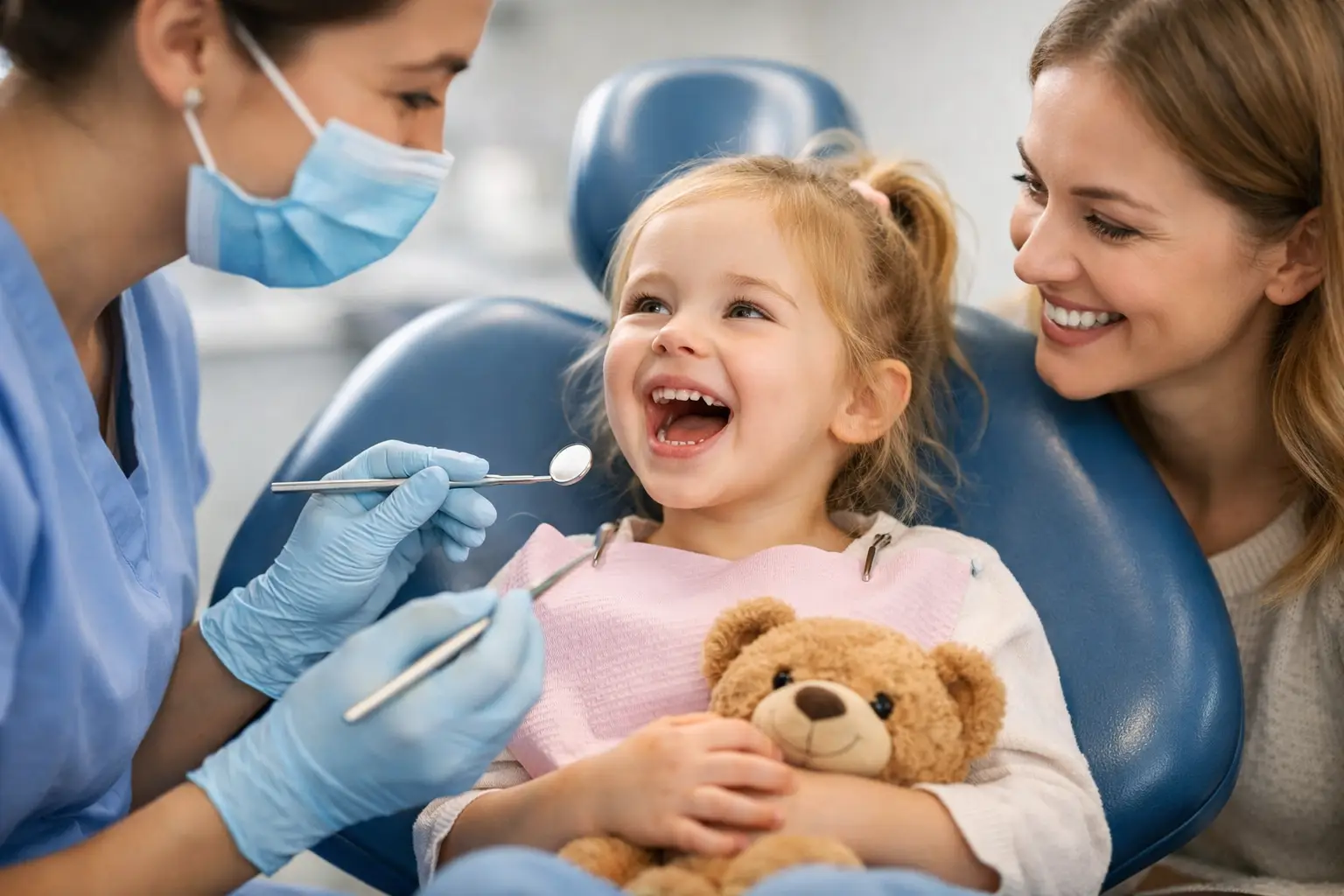
The first appointment is usually gentle and straightforward. In many cases, your child may sit on your lap while the dentist takes a look at the gums, teeth, bite, and oral tissues. The goal is to keep things low-pressure while gathering useful information.
The dentist may count the teeth, check for early cavities, and look at how the teeth and jaws are developing. You may also get guidance on brushing, fluoride, teething discomfort, pacifier use, and what kinds of snacks or drinks are hardest on young teeth.
If your child is upset or wiggly, that does not mean the visit went badly. It is normal. Early visits are partly about familiarity. Even a short exam can be valuable, and most parents leave knowing much more than they expected.
Signs your child should be seen sooner
Even if your child is not yet 1, there are situations where an earlier visit makes sense. If you notice white spots, brown spots, or pitting on the teeth, it is worth having them checked. Those can be early signs of decay.
You should also schedule an appointment sooner if your child has a dental injury, swelling, bleeding that does not stop, obvious tooth pain, or trouble eating because of mouth discomfort. Infections and trauma are not things to watch for too long at home.
Sometimes the concern is less urgent but still worth discussing. Delayed tooth eruption, unusual gum changes, or habits that seem intense or prolonged can benefit from a professional opinion. In those cases, reassurance is useful too. Not every difference is a problem, but it helps to know what is normal for your child.
How often should kids go after the first visit?
Once that first appointment is done, many children do well with dental visits every six months. That schedule works for routine monitoring, preventive care, and building familiarity over time.
That said, six months is not a rule that fits every child in exactly the same way. Some kids may need more frequent visits because they have a higher risk of cavities, enamel concerns, or habits that affect oral development. Others may simply need closer follow-up after an injury or early dental finding.
A family-focused dental office will usually tailor the schedule to your child instead of forcing a one-size-fits-all plan. That matters because prevention works best when it matches real life.
What parents can do at home before that first appointment
One of the most helpful parts of early dental care happens at home. Even before teeth come in, you can wipe your baby’s gums gently with a clean, damp cloth. Once the first tooth appears, use a small soft-bristled toothbrush and a tiny smear of fluoride toothpaste.
As more teeth erupt, brushing twice a day becomes the goal. Young children do not have the coordination to brush well on their own, so parents should expect to help for several years. Flossing matters too once teeth begin touching.
Feeding habits also make a difference. Frequent sipping on juice, sweetened drinks, or milk at bedtime can raise cavity risk. It is not about being perfect. It is about noticing patterns early and making small adjustments before damage starts.
Common questions parents ask about timing
A frequent question is whether baby teeth really need that much attention if they are going to fall out anyway. The answer is yes. Cavities in baby teeth can lead to pain, infection, trouble eating, sleep disruption, and problems with speech or spacing.
Another common concern is whether a child is too young to cooperate. Most dentists who see young children expect a first visit to be brief and age-appropriate. Cooperation helps, but it is not the requirement parents sometimes imagine.
Parents also ask if they should wait until all the baby teeth have come in. In most cases, no. Waiting can delay preventive advice and allow early decay to go unnoticed.
How to make the first visit easier
Timing the appointment well can help. Try to choose a time when your child is usually rested and fed, rather than close to nap time. Bring comfort items if they help, and keep your explanation simple and upbeat.
It is usually better not to promise that nothing unusual will happen or say things like “it won’t hurt” before a routine checkup. Young children often do better when the visit is presented as normal and friendly, not as something scary that needs heavy reassurance.
Your own tone matters too. If you stay relaxed, your child is more likely to pick up on that. A welcoming office with a calm, family-centered approach can make a real difference, especially during those first experiences.
When should kids see dentist if nothing seems wrong?
This is the question behind many delayed appointments. If your child is eating well, sleeping well, and not complaining, it is easy to assume there is no rush. But dental issues in young children are often quiet at first. Early cavities do not always cause pain right away, and bite or eruption concerns are not always obvious at home.
That is why the best answer to when should kids see dentist is still early, even when everything appears normal. The goal is not to find something wrong. The goal is to keep things healthy, answer your questions, and create a comfortable routine your child can grow up with.
For families who want care to feel both modern and personal, that early start can set the stage for years of easier visits and better prevention. If you have been meaning to book that first appointment, sooner is usually the better choice.
A first dental visit does not need to be a big milestone with perfect behavior and a long checklist. It just needs to happen early enough to give your child a healthy start.
No responses yet