
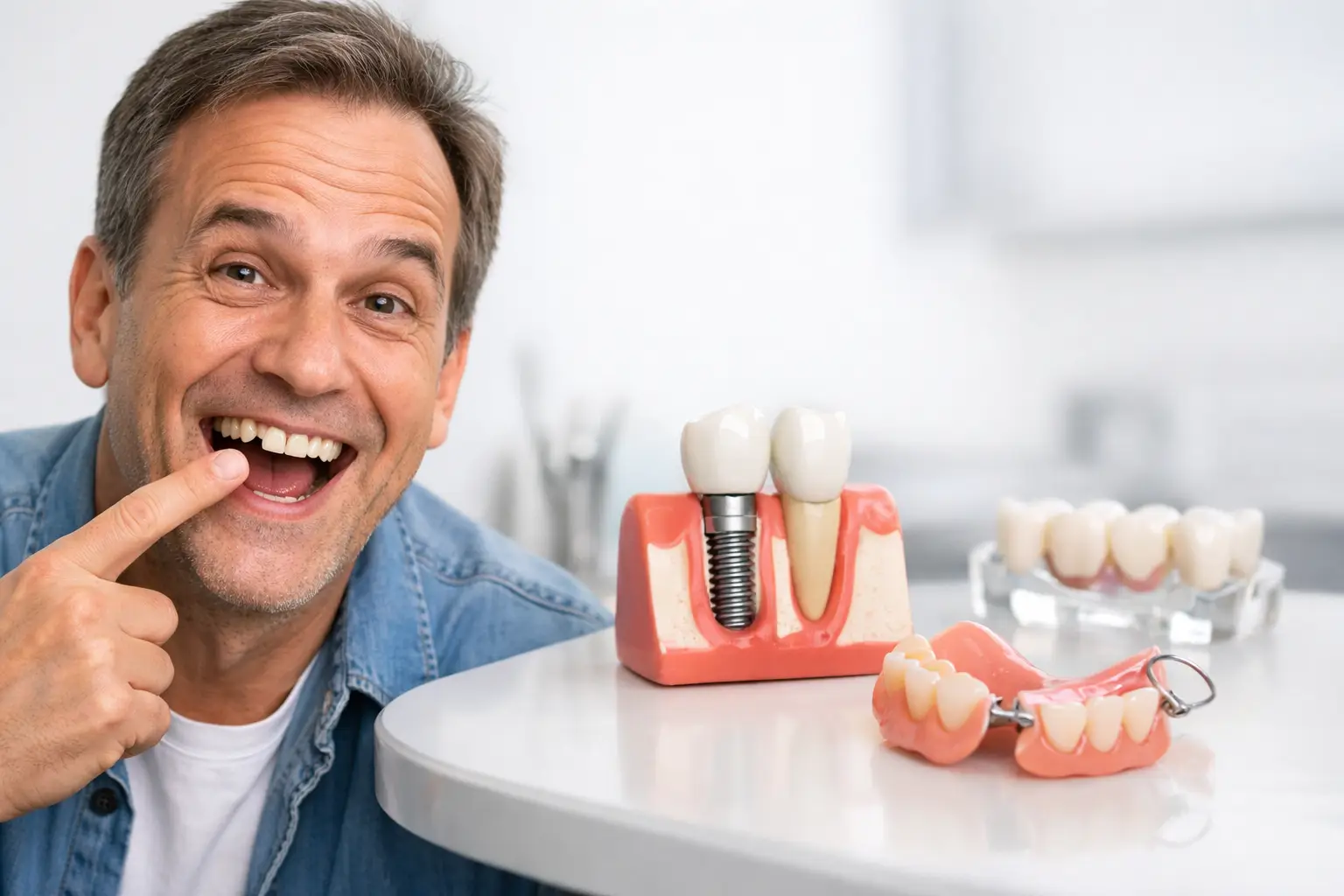
Losing a tooth changes more than your smile. You may notice food getting trapped in new places, a shift in how you bite, or even a hesitation to laugh without thinking about it first. If you are weighing missing tooth replacement options, the right choice depends on more than appearance alone. Comfort, function, long-term maintenance, cost, and the condition of your surrounding teeth all matter.
At Oakville Dental House, these conversations are often less about finding a one-size-fits-all fix and more about finding the option that fits your mouth, your health, and your daily life. Some patients want the closest thing to a natural tooth. Others want a reliable solution that restores chewing and looks good without a lengthy treatment process. Both goals are valid.
Why replacing a missing tooth matters
When a tooth is missing, nearby teeth can begin to drift into the empty space over time. That movement can affect your bite, make cleaning harder, and create uneven pressure on other teeth. If the missing tooth is not visible when you smile, it can still affect how you chew and how your jaw functions.
There is also the issue of bone loss. Tooth roots help stimulate the jawbone. When a tooth is gone, that area of bone can gradually shrink. This does not happen overnight, but it can influence your future treatment choices if too much time passes.
For some people, replacing a missing tooth is mainly about confidence. For others, it is about keeping the rest of the mouth stable and healthy. Most often, it is both.
Missing tooth replacement options at a glance
The three most common missing tooth replacement options are dental implants, dental bridges, and dentures. Each can restore your smile, but they do it in different ways.
An implant replaces the tooth root and the visible tooth. A bridge fills the space by anchoring an artificial tooth to neighboring teeth. A denture replaces one or more teeth with a removable appliance. Which one makes sense depends on how many teeth are missing, where the gap is located, your oral health, and your preferences.
Dental implants
A dental implant is often considered the closest replacement to a natural tooth. A small titanium post is placed in the jawbone, where it functions like an artificial root. After healing, a custom crown is attached on top.
The biggest advantage of an implant is that it stands on its own. It does not rely on the teeth beside it for support, and it helps stimulate the jawbone in a way that other options cannot. Many patients also like that an implant feels secure and natural when chewing and speaking.
That said, implants are not the fastest option. Treatment usually takes place over several months, especially if healing time or bone grafting is needed. Not every patient is an immediate candidate either. Healthy gums, adequate bone support, and certain general health factors all play a role.
Implants can be an excellent long-term choice, but they do require planning. If you want the most natural function and you are comfortable with a more involved process, they are often worth discussing first.
Dental bridges
A dental bridge replaces a missing tooth by attaching a false tooth to the natural teeth on either side of the space, or in some cases to implants. For patients missing one tooth or a small number of teeth in a row, a bridge can be an effective and attractive solution.
One of the benefits of a bridge is efficiency. Compared with an implant, treatment is often completed more quickly. A bridge can also work well when the neighboring teeth already need crowns, since those teeth can be restored while supporting the replacement tooth.
The trade-off is that a traditional bridge usually requires reshaping the adjacent teeth. Even if those teeth are healthy, they need to be prepared to support the restoration. Bridges also do not replace the root below the gumline, so they do not provide the same bone-preserving benefit as an implant.
Still, a bridge can be an excellent middle ground for patients who want a fixed option that looks natural and restores chewing without surgery.
Partial dentures and full dentures
Dentures remain a practical solution for many patients, especially when several teeth are missing. A partial denture replaces multiple teeth while using the remaining natural teeth for support. A full denture replaces all teeth in the upper or lower arch.
Modern dentures can look far more natural than many people expect, and they can significantly improve day-to-day comfort, speech, and appearance. For patients seeking a non-surgical option, dentures are often the most accessible place to start.
The adjustment period matters here. Dentures can take time to get used to, and removable appliances may feel less stable than fixed options. Fit can also change over time as the shape of the gums and bone changes. Some patients do very well with dentures, while others want more security than a removable appliance can provide.
For that reason, some people eventually move to implant-supported dentures, which combine the coverage of a denture with the added stability of implants.
How to choose between missing tooth replacement options
The best treatment is rarely about what is most popular. It is about what works for your mouth and your priorities.
If you are missing a single tooth and want the most natural stand-alone replacement, an implant may be the best fit. If you want a fixed solution without implant surgery, a bridge may make more sense. If you are missing several teeth and want a practical way to restore function, a partial denture or implant-supported option may be more appropriate.
Budget also plays a role, and that is reasonable. Some options have a lower upfront cost but may need more adjustments or replacement over time. Others cost more initially but can offer long-term value and stability. Looking at the full picture usually leads to a better decision than focusing on the first number alone.
Your timeline matters too. If you have an upcoming event, want to restore chewing quickly, or need to work around family and job commitments, that can affect the recommendation. A good treatment plan should fit real life.
What your dentist will evaluate first
Before recommending treatment, your dentist will look at the health of your gums, bone support, bite alignment, and the condition of neighboring teeth. They will also consider whether the missing tooth is in a high-pressure chewing area or a more visible front area where esthetics matter most.
Imaging is often part of the process because it gives a clearer view of the bone and surrounding structures. This is especially important for implants, but it also helps with bridge and denture planning.
Medical history matters as well. Certain conditions, medications, and habits such as smoking can influence healing and long-term success. That does not automatically rule out treatment, but it may affect timing or which option is most predictable.
Living with your new tooth replacement
No matter which option you choose, maintenance is part of the outcome. Implants still need regular brushing, flossing, and professional care. Bridges require careful cleaning around and under the restoration. Dentures need daily cleaning and periodic evaluation to keep the fit comfortable and functional.
The good news is that replacing a missing tooth often improves everyday life quickly. Patients often notice better chewing, clearer speech, and a return of confidence sooner than expected. The emotional relief can be just as meaningful as the physical improvement.
If you have been putting off treatment, you are not alone. Many people wait because they are unsure of the options or assume the process will be more complicated than it really is. A clear exam and conversation can make the next step feel much more manageable.
A missing tooth does not have to stay an open question. The right replacement should feel comfortable, support your oral health, and make life easier, not harder. When the plan is built around your needs, restoring your smile can feel less like a big decision and more like a steady step forward.
No responses yet